How Football Statistics Are Changing the Way Matches Are Analysed
Football analysis has evolved considerably over th

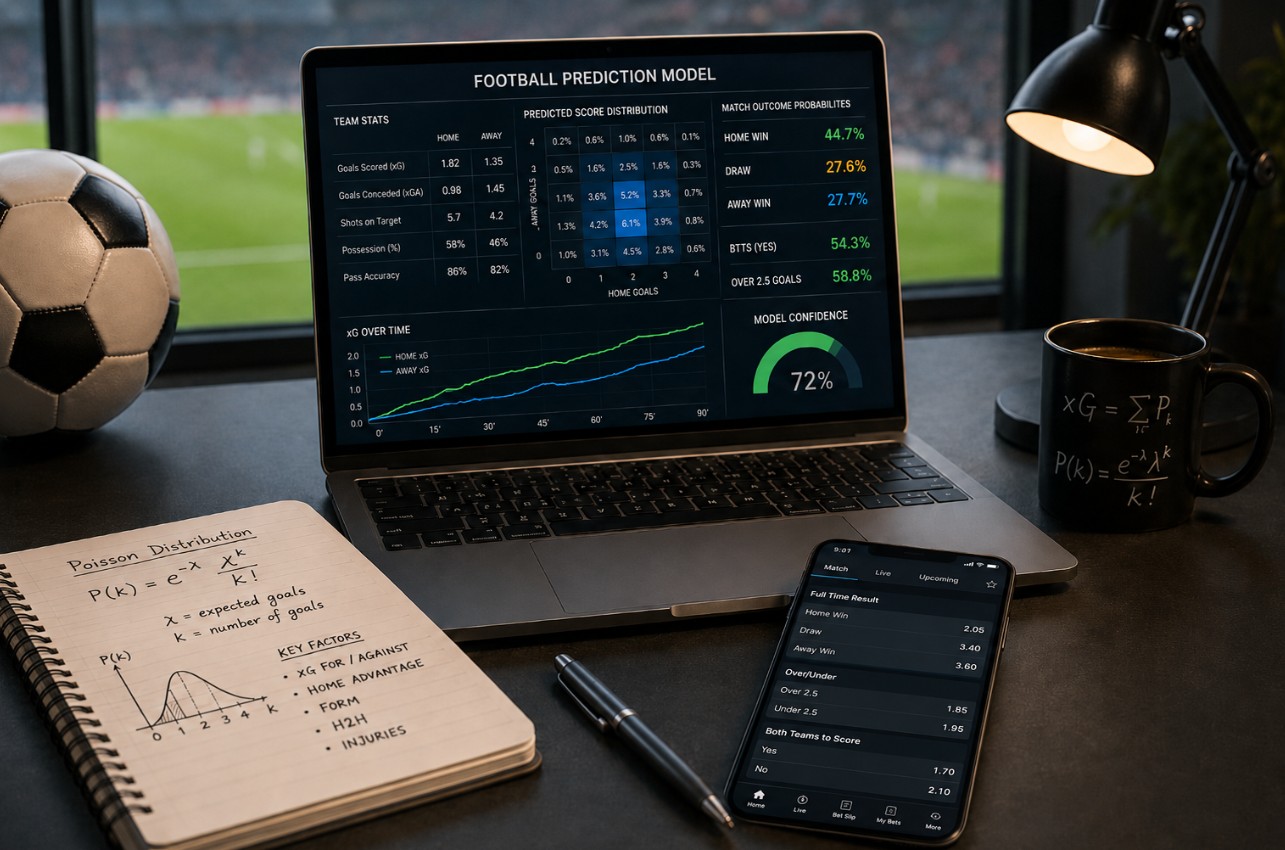
Football analysis has evolved considerably over the past decade. While traditional statistics such as goals, possession and shots remain important, modern technology allows analysts to examine matches in greater detail.
From advanced performance metrics to sophisticated tracking systems, clubs and sports media organisations now have access to information that provides a more comprehensive understanding of team performances.
These developments are influencing how football is discussed, reported and evaluated across professional competitions.
The Evolution of Football Performance Data
Traditional football statistics provide a useful overview of what happens during a match, but they do not always explain the circumstances behind individual performances.
Modern analytical systems examine additional factors, including player positioning, passing patterns, defensive movements and attacking sequences.
One widely used metric is expected goals, commonly known as xG. This statistical model estimates the probability of a particular scoring opportunity resulting in a goal based on characteristics such as shot location and angle.
Different analytical providers may use additional variables when calculating their models.
Although these measurements offer useful context, they are not definitive assessments of team quality or individual ability.
Football analysts therefore combine statistical information with tactical observations and video footage to develop a more complete understanding of performances.
How Technology Supports Tactical Analysis
Professional football clubs increasingly incorporate analytical technology into their preparation and performance evaluation processes.
Video analysis software enables coaching departments to examine specific match situations, including defensive organisation, attacking transitions and pressing structures.
Player-tracking systems can provide information about movement patterns and positional relationships throughout a match.
This information helps technical staff identify recurring tactical characteristics and assess how different formations operate.
For example, analysts may examine how a team responds when possession changes or how effectively its defensive structure limits space between players.
Such observations can inform training sessions and tactical discussions.
However, professional judgement remains essential when interpreting the information collected.
The Influence of Data on Football Media
The increasing availability of detailed football statistics has also transformed sports journalism.
Match reports and tactical features can now incorporate visualisations, performance comparisons and historical datasets to provide additional context.
Digital sports platforms use statistical information to explain team formations, examine individual contributions and highlight patterns across competitions.
The same wider availability of sporting data has influenced other digital sectors, including platforms like Bally’s UK associated with online football betting, where match statistics and historical performance records may be presented as reference information for adult audiences.
Nevertheless, historical statistics cannot establish future match results with certainty.
For sports journalists, the challenge is to communicate complex information clearly while maintaining accuracy and avoiding conclusions unsupported by the available evidence.
Understanding the Limitations of Football Statistics
Despite advances in analytical technology, football remains a complex sport influenced by numerous interacting factors.
Statistical models simplify aspects of performance into measurable variables, but not every contribution can be represented accurately through numerical data.
For example, a player's positioning may influence an attacking sequence without resulting in a recorded pass, shot or defensive action.
Similarly, tactical instructions and team responsibilities can affect how individual performance metrics should be interpreted.
Analysts must also consider differences in playing styles, opposition quality and the amount of available data.
These limitations explain why statistical analysis is generally most effective when combined with detailed observation and an understanding of the tactical context.
The Growing Role of Artificial Intelligence
Artificial intelligence and machine learning are introducing additional possibilities for football performance analysis.
Computer vision systems can assist with identifying player movements and tracking positional information from video recordings.
Machine learning techniques can also help analysts recognise recurring patterns within large datasets.
These applications may improve the efficiency of certain analytical processes, particularly when reviewing extensive collections of match footage.
However, automated systems still require appropriate validation and oversight.
The reliability of their findings depends on the quality of the underlying data, the methodology used and the interpretation of the results.
What the Future Holds for Football Analysis
As technology continues to develop, football clubs and media organisations are likely to explore further applications of advanced performance analysis.
Improved tracking systems, more sophisticated visualisations and increasingly accessible analytical software could provide additional ways to examine the technical and tactical aspects of the sport.
At the same time, the importance of professional expertise is unlikely to disappear.
Coaches, scouts and analysts must continue to interpret information within the broader context of team objectives and individual responsibilities.
Ultimately, the evolution of football statistics reflects a wider transformation in how technology supports sporting analysis, providing new tools for understanding one of the world's most extensively studied professional sports.